

Dating App Strategy: Which App to Use, Whether Boosts Work, and Why Deleting Your Profile Won't Save You
Every guy on the apps eventually starts asking the wrong questions. Should I switch to Hinge because Tinder feels dead in my city? Is the Boost worth twelve dollars? Should I delete the whole profile and start clean, maybe the algorithm just has it out for me? Every one of those questions assumes the fight is happening somewhere other than where it actually is.
Here is the flip: the app is not the battlefield. Your profile is. App-hopping, boosting, and account-resetting are ways of rearranging the seating chart while ignoring what is actually on stage. And what is on stage decides the outcome before any of those other decisions even get a vote.
There is a reason a whole cottage industry sells algorithm hacks instead of profile fixes. A hack is recurring revenue. A good photo is a one-time expense. Nobody is getting rich selling you the boring truth, so the boring truth doesn't get sold much. Here it is anyway, backed by the research, not the forum superstition.
Which App Actually Deserves Your Time
Start with the apps themselves, because the differences between them are real, even if they are smaller than the debate suggests.
Hinge is built to slow people down. Prompts instead of a blank bio, one photo at a time instead of a stacked deck, a smaller daily queue instead of infinite scroll. That structure forces a woman to engage with something specific before she decides, which means the men who do well there tend to be the ones with a profile actually worth engaging with. It rewards the effort you put in up front, and it is the highest-leverage place to put your energy first.
Tinder is built for volume. It remains the largest pool by a wide margin, which sounds like an advantage until you register that men heavily outnumber women on it in most markets. You are not just competing with a photo. You are competing with a crowd. More reach, but also more noise, and worse odds on any single swipe.
Bumble sits in an odd middle ground. Women message first, which removes the one lever men actually control: initiating. That single design choice is why Bumble lands as a distant third in most men's actual results, whatever the app's growth numbers say.
None of this means run all three at once. It means put real effort into one, and for most men that is Hinge, then treat a second app as overflow, not a parallel campaign. Spreading a mediocre profile across four apps does not multiply your chances. It just multiplies your mediocre profile.
Paying for Visibility on a Profile Nobody Wants
Now the part men spend actual money on: Boosts, Roses, Super Likes. Do they work?
They do exactly one thing. They put your existing profile in front of more eyes, faster. That's it. A boost doesn't change a single pixel of your photos or a word of your bio. If your profile currently converts at a certain rate, paying for a boost doesn't raise that rate. It just runs more people through it.
That distinction matters more than it sounds like it should, because of how steep the underlying curve already is. The most rigorous study ever run on this analyzed the messaging behavior of over 6,000 online daters, with 100 independent raters scoring every profile photo. Photo attractiveness was the strongest single predictor of who got contacted, ahead of income, ahead of education, ahead of everything else measured. Men in the top 20% of looks ratings were contacted at roughly four times the rate of men in the bottom 20% (Hitsch, Hortaçsu & Ariely, 2006). A boost doesn't move you up that curve. It just shows more people exactly where you currently sit on it.
Worse, the extra exposure runs straight into a second, less comfortable finding. Men on dating apps default to contacting women more desirable than themselves, a well-documented pattern researchers call aspirational pursuit (Topinkova & Diviak, 2025). It isn't irrational. A swipe costs nothing, so why not aim high? But the data on which swipes actually turn into matches is blunt.
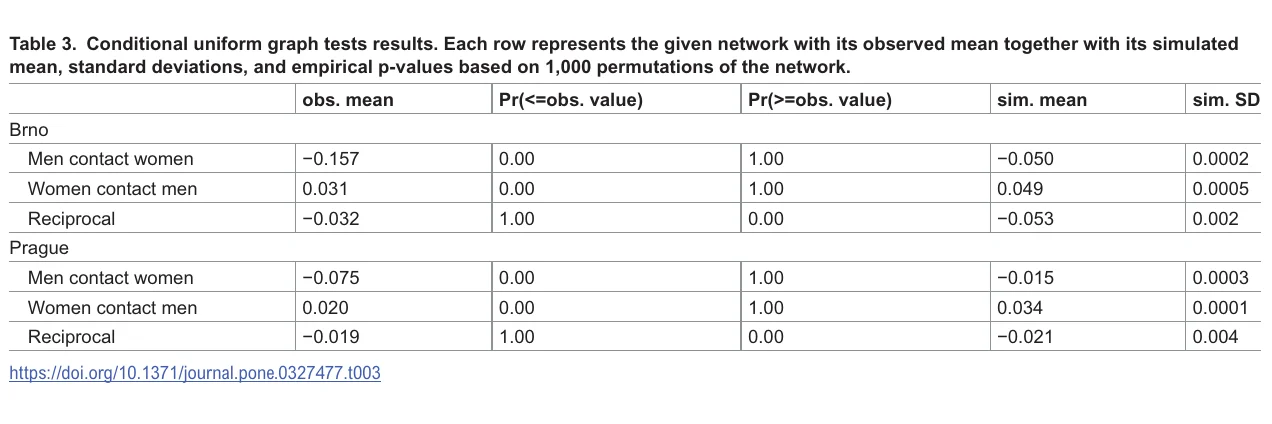
Topinkova & Diviak (2025): the gap between what men reach for and what actually matches back is four to five times wider than the gap in the pairs that stick.
When men reach for women well above their own desirability tier, the gap between them and the pairs that actually reciprocate is four to five times wider than the gap seen in matches that go both ways. Reciprocated matches converge hard toward people at a similar level. Most aspirational swipes just vanish into that gap and never come back.
Put a boost on top of that pattern and you haven't fixed anything. You've paid to run the same losing math faster. More people see the profile, more people make the same snap judgment, more of the same rejections happen in less time. A boost that lifts a weak profile's conversion from 2% of a small audience to 2% of a much bigger one will produce a few extra matches. It is still the most expensive way available to stand still.
How Much Swiping Is Actually Productive
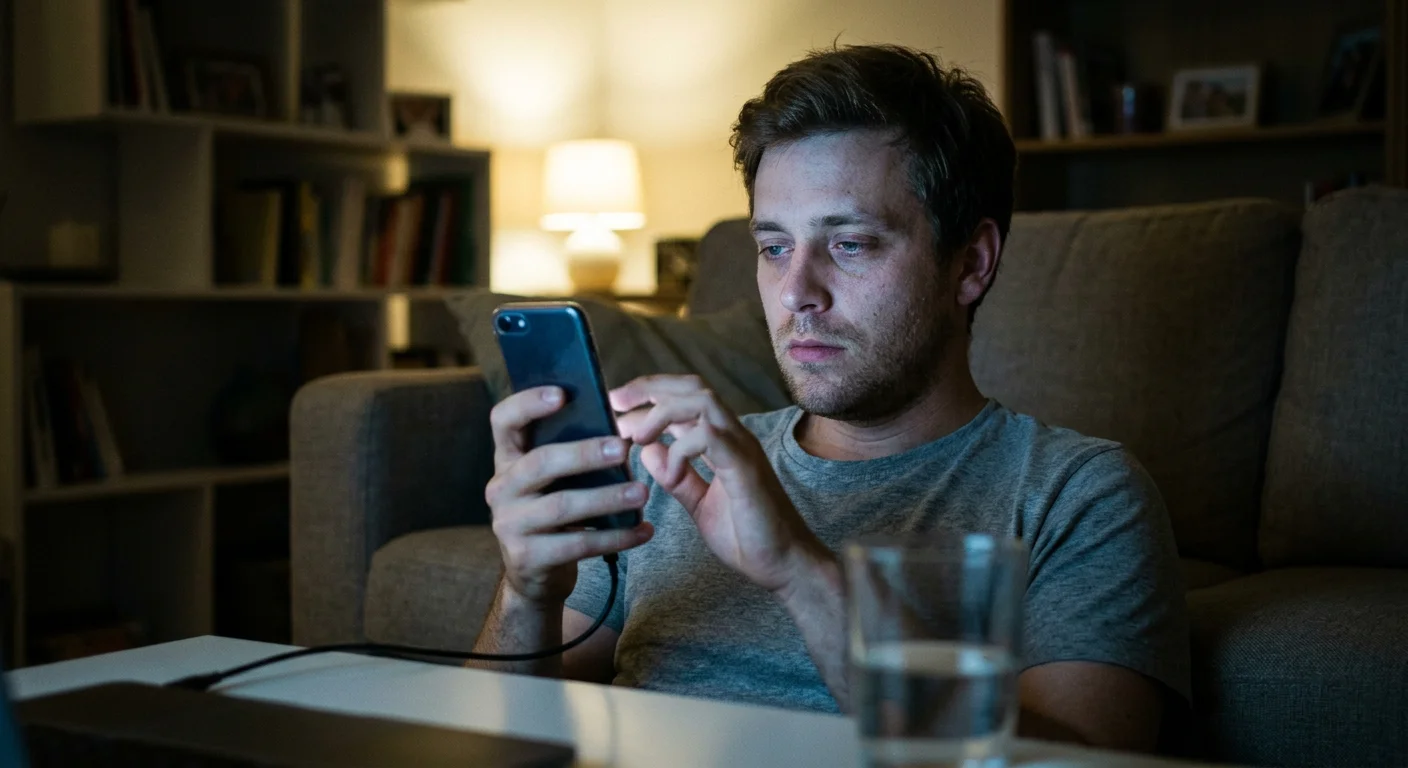
Three hours of swiping isn't three hours of strategy. It's three hours of your judgment degrading while you make the same instant call, over and over.
Then there's the question of volume: how many hours a day should you actually be swiping?
Less than you think, and not for the reason people assume. It isn't that swiping a lot "looks needy" or trips some hidden penalty. That's mostly forum superstition. It's that swiping is a snap-judgment exercise on both ends, and snap judgments don't get better with fatigue.
The research on how these decisions actually get made backs this up directly. Physical attractiveness reliably predicts both swiping decisions on dating apps and real dating decisions made after speed-dating events, and the effect shows up fast, before any deliberate reasoning kicks in (Leger, Jones & Shiramizu, 2025). You are making an instant call on every profile you see, and everyone seeing yours is doing the same to you. Piling up hours doesn't add more strategy to that process. It just adds more repetitions of the same reflex, on progressively less attention.
There's a hint in the literature about what the fix looks like. One widely studied dating app caps how many profiles a user sees per day instead of offering an infinite deck, and researchers studying it noted, almost in passing, that the limit likely makes each choice more deliberate (Levy, Markell & Cerf, 2019). That's not a dedicated finding about swipe fatigue, nobody has run that exact study yet, but it lines up with everything else we know about decision quality under unlimited choice: cap the input, and the decisions you actually make get sharper.
An hour, done with real attention, beats three hours of numb thumb-scrolling. Not because the extra two hours are wasted on principle, but because somewhere around the one-hour mark you stop evaluating and start reflexing, and a reflex doesn't read a profile. It just clears it.
The Delete-and-Restart Myth
Shadowbans and cooldowns are real on some platforms. Delete an account and rebuild it too fast, using the same device and phone number, and a few apps will flag it as suspicious activity and throttle you for it. That part is a genuine, if minor, operational detail worth knowing before you nuke a profile in frustration.
But here's what a clean slate doesn't fix: you. Specifically, whatever your photos and presentation communicate about your own desirability, which the market reads and recalibrates against within days, new account or not.
A new account with the same photos is still the same profile. The market doesn't grade on account age.
There's a striking experiment described in Matt Ridley's The Red Queen that explains why. Psychologist Bruce Ellis had participants wear numbered cards on their foreheads, visible to everyone but themselves, and told them to pair off with the partner they wanted most. Nobody told anyone their number. And yet people consistently ended up paired with partners close to their own, unseen rank. Nobody announced the hierarchy. Everybody found their level anyway, because the read on relative value doesn't require a label. It's happening constantly and automatically, from cues everyone in the room can already see.
“People end up married to their equals in attractiveness… The answer is that we each instinctively know our relative worth.”
Matt Ridley — The Red Queen
A dating app account works the same way, minus the forehead. Delete it, rebuild it, rename it, whatever. The photos are still the photos. The presentation is still the presentation. The pool of people evaluating you is still applying the same instant, largely accurate read on where you sit, and the reciprocated matches you eventually get will still cluster around people at a similar level to you, the same pattern researchers find when they map who actually pairs off versus who merely reaches (Topinkova & Diviak, 2025). A new account doesn't erase your rank. It just makes you re-earn the same rank from zero, on a platform that also has to relearn who you are from scratch, usually at a cost in visibility while it does.
Fix the account status if it's genuinely broken. Then stop treating "restart" as a substitute for "improve." The reset button was never going to do the one thing that actually changes your results.
The One Question Underneath All of It
Strip the procedural questions away, which app, how many Boosts, whether to reset, and one honest question is left standing: what is your profile actually communicating, and have you ever looked at it with anything other than your own eyes?
Most men haven't. They pick photos they personally like, write a bio in five minutes, and then spend the next six months troubleshooting the wrong layer of the system: switching apps, buying visibility, wiping accounts, anything that doesn't require actually looking at the thing doing all the work.
That's the trap. Optimizing your app behavior around a mediocre profile is tuning your bidding strategy on an ad nobody clicks. The bidding was never the problem.
Flairt exists for the layer underneath all of that: an honest, research-grounded read on what your photos and profile are actually signaling, before you spend another dollar on a Boost or another month convinced the app is broken. Built on 30+ peer-reviewed studies, including the research covered in this article.
References
- Hitsch, G. J., Hortaçsu, A., & Ariely, D. (2006). What Makes You Click? Mate Preferences and Matching Outcomes in Online Dating. University of Chicago / MIT. Working paper. Available at: home.uchicago.edu/~hortacsu/onlinedating.pdf
- Topinkova, R., & Diviak, T. (2025). It takes two to tango: A directed two-mode network approach to desirability on a mobile dating app. PLOS One, 20(7), e0327477. Available at: pmc.ncbi.nlm.nih.gov/articles/PMC12286370/
- Leger, K., Jones, B. C., & Shiramizu, V. K. M. (2025). Testing for individual differences in the effects of men’s physical attractiveness and perceived abusiveness on women’s hypothetical dating decisions. Scientific Reports. Available at: nature.com/articles/s41598-025-07575-5
- Levy, J., Markell, D., & Cerf, M. (2019). Polar Similars: Using Massive Mobile Dating Data to Predict Synchronization and Similarity in Dating Preferences. Frontiers in Psychology. Available at: pmc.ncbi.nlm.nih.gov/articles/PMC6743509/
- Ridley, M. (1993). The Red Queen: Sex and the Evolution of Human Nature. Harper Perennial.
Stop fighting the app. Fix what it's showing.
Boosts, app-hopping, and restarts can't fix a profile they never touch.
Flairt analyses your photos and profile against the same research covered in this article, then builds a personalised strategy to close the gap. Built on 30+ peer-reviewed studies and real platform data.
Frequently asked questions
Which dating app should men use: Tinder, Hinge, or Bumble?
Hinge is built to slow evaluation down (prompts, one photo at a time, a capped daily queue), which tends to reward men with a genuinely strong profile. Tinder offers the largest pool but men heavily outnumber women on it in most markets, so a single swipe carries worse odds. Bumble's women-message-first rule removes the one lever men control, which is why it lands as a distant third for most men. Put real effort into one app, usually Hinge, rather than spreading the same profile thin across several.
Do dating app Boosts, Roses, and Super Likes actually work?
They increase visibility, not appeal. A Boost or Rose puts your existing profile in front of more people faster, but it doesn't change your photos or bio. Research on photo attractiveness shows men in the top 20% of looks ratings are contacted at roughly four times the rate of men in the bottom 20% (Hitsch, Hortacsu & Ariely, 2006), and paid visibility just runs more people through whatever rate your current profile already converts at.
How much time should I spend swiping on dating apps each day?
About an hour, done with real attention, beats several hours of unfocused scrolling. Swiping decisions are snap judgments made on both sides, and research shows physical attractiveness strongly predicts swiping and dating decisions with the effect appearing almost instantly (Leger, Jones & Shiramizu, 2025). Long unfocused sessions turn evaluation into reflex rather than deliberate choice.
Does deleting and restarting a dating app profile fix low matches?
No. Deleting and rebuilding too quickly can trigger shadowbans on some platforms, which is a real but minor operational issue. The bigger problem is that a fresh account doesn't change what your photos communicate, and research on dating app networks shows matches consistently cluster around people of similar desirability regardless of account history (Topinkova & Diviak, 2025). A new profile with the same photos gets read the same way.
What actually determines how many matches a man gets on dating apps?
Photo attractiveness, measured in how the profile is actually presented (lighting, grooming, setting, context), is the single strongest predictor of first contact across the research, outperforming income, education, and every other factor by a wide margin (Hitsch, Hortacsu & Ariely, 2006). App choice, paid boosts, and account resets are all secondary to fixing what the photos are actually showing.