
The Dog in the Photo: Do Pets Really Get You More Matches?

You think the dog is doing the work. It isn't.
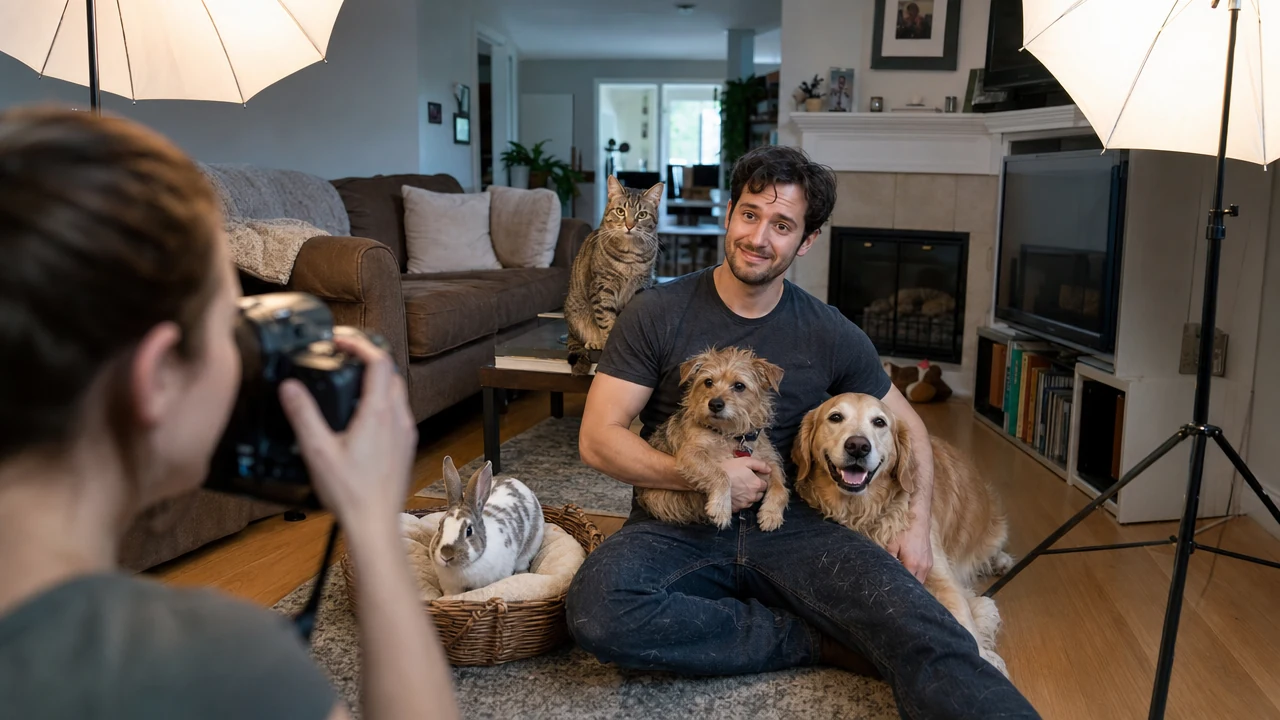
The pet photo has been folklore for a decade. Every guy has heard some version of it: borrow a friend's golden retriever, snap a few frames, watch the matches pour in. It sounds like a hack because it asks nothing of you. Change nothing, rent a labrador, win. A dog on your profile is not a cheat code. It's a garnish. Garnish on a good plate makes the plate better. Garnish on an empty plate is a leaf sitting on a bare table.
There's even a word for the men who missed that distinction: dogfishing. Guys who don't own a dog will still pose with one, because a blog promised them the animal prints matches. The advice industry adores this trick. It's cheap to sell and it lets you skip the hard part, which is becoming a man worth photographing in the first place. The research is less generous than the folklore, and a lot more useful.
What the Dog Is Actually Doing
Start with why the trick works at all, because it does work, in a narrow way. A pet is a social-context cue. Your brain reads other people, and other animals, in the frame as information about you. The clearest version of this is mate-choice copying. When a man is seen alongside a woman, or in a warm social setting, women rate him as more attractive than the exact same man shown alone. His face didn't change. His context did (Gouda-Vossos et al., 2016).
A dog runs a gentler version of the same circuit. It quietly says other living things choose to be near this man and depend on him. That reads as social, steady, and safe. It shows up in the real world too: men asking women for their number on the street succeeded far more often with a dog beside them than without one, because a dog needs walking, feeding, and attention, so it hints the owner is reliable and capable of caring for something (Guéguen & Ciccotti, reported in Dürnberger, 2022).
Here's the part the "rent a dog" crowd skips. What the animal triggers is warmth and approachability, not raw attraction. A dog can't turn an unattractive man into an attractive one. It adds a layer to a man who already holds the eye. Think of it as seasoning. Seasoning rescues a good dish and does nothing for an empty bowl. The pet gives complexity to appeal that already exists. It does not create appeal from scratch.
Dogs Win. For Men, Cats Can Cost You.
Not all pets send the same message, and the gap is bigger than most guys realise. Across 2,400 dating profiles studied in two cities on opposite sides of the world, Vienna and Tokyo, dogs were the most frequently shown animal in both places (Dürnberger, 2022). People reach for the dog for a reason. It's the animal that most obviously advertises its owner's social life.
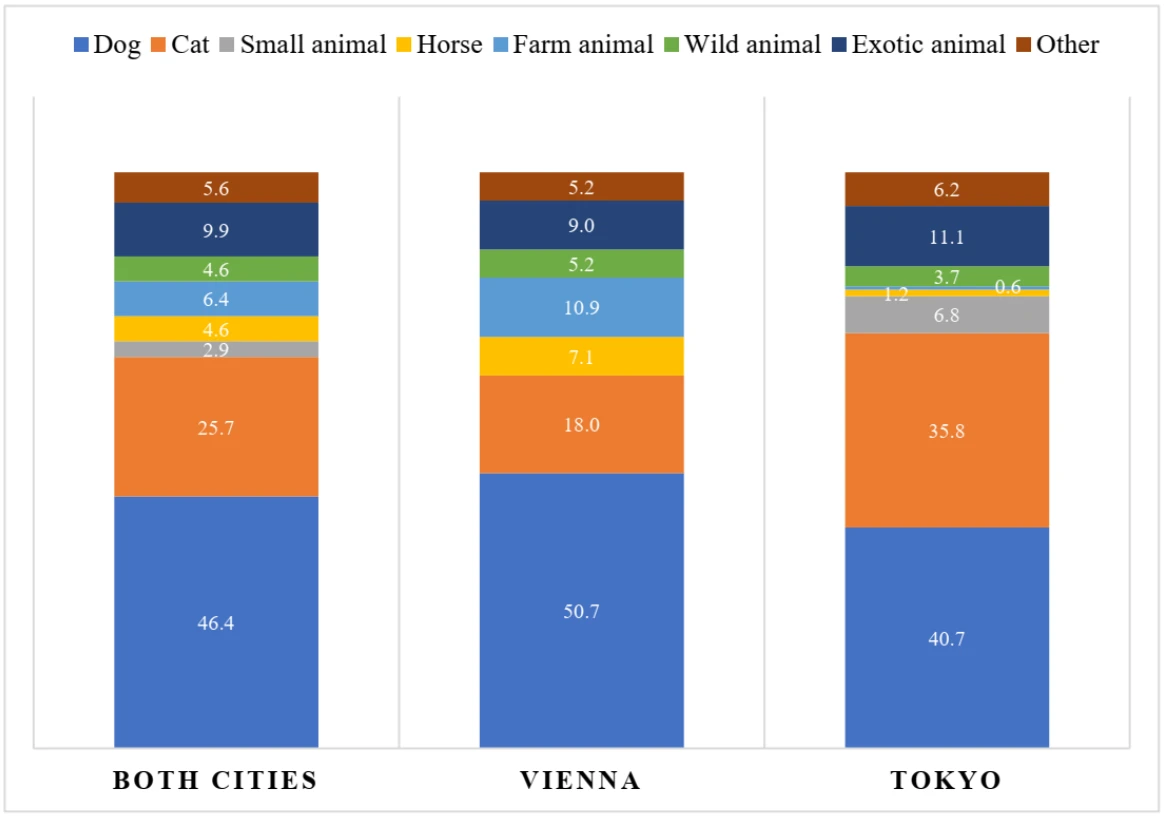
Dürnberger (2022): dogs dominate the animals people actually post, in both Vienna and Tokyo. Cats trail behind.
Dogs also do something specific for a man's image. Because a dog demands daily care and social effort, it reads as proof of exactly those traits, and men labelled "dog people" tend to be seen as more masculine and more attractive than men labelled "cat people" (Dürnberger, 2022). The dog isn't just cute. It's a masculinity and dependability signal wearing a fur coat.
The cat is where a lot of men quietly hurt themselves. In a survey of 708 women aged 18 to 24, men pictured with cats were rated as less masculine, more neurotic, and less dateable, for both short and long-term relationships (Kogan & Volsche, reported in Dürnberger, 2022). Same "pet warmth" logic, opposite result, purely because of the species. The dog reads as capable and caring. The cat, fairly or not, reads to many women as passive.
This is not "never own a cat." If the cat is genuinely part of your life, one calm, well-lit shot won't sink you. The move that sinks you is leading your profile with the cat, or stacking three of them, and letting the animal write your first impression for you.
The Slot You're Wasting
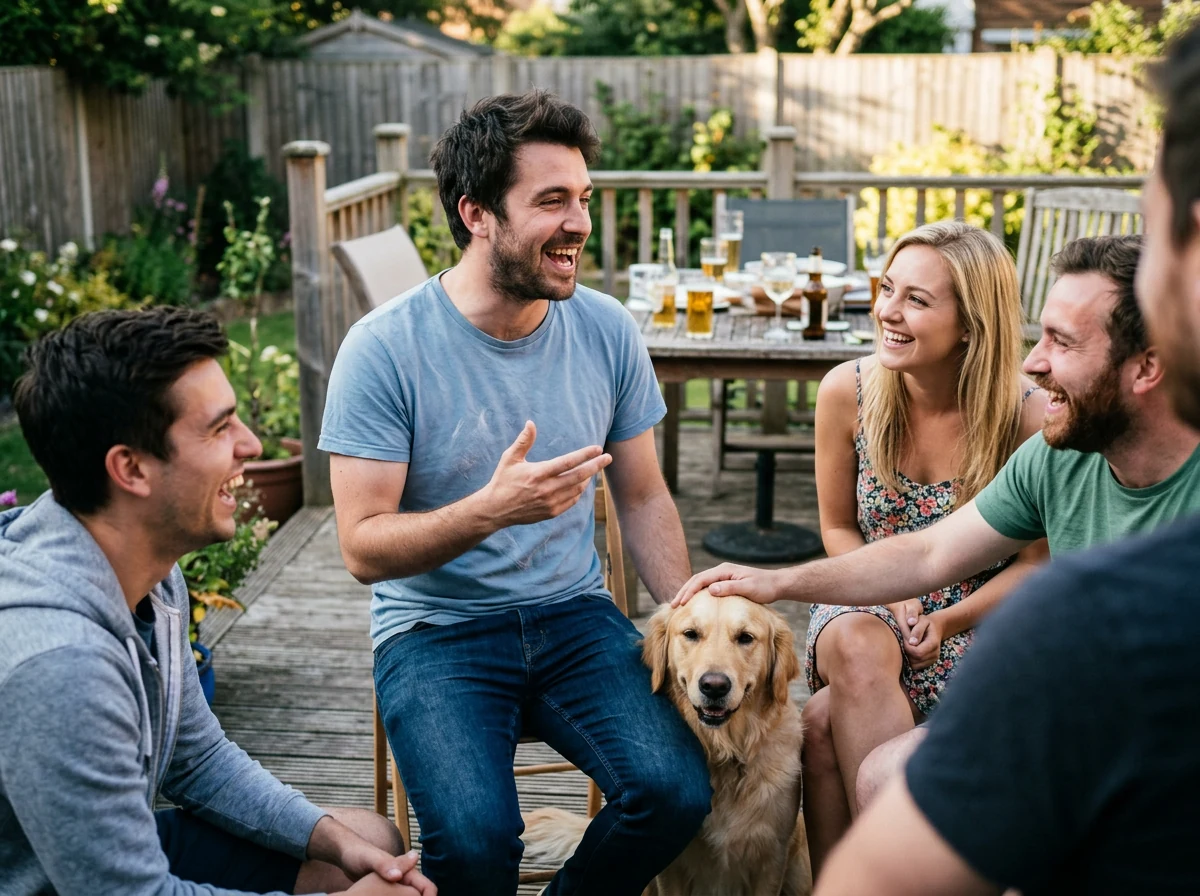
The deck-stacking shot: you as the obvious main character, friends enjoying you, dog woven in. Three signals at once.
You get maybe six photos. Every one is a job interview. This is where the pet folklore quietly betrays the men who trust it, because a pet placed wrong doesn't help you. It interviews the wrong candidate.
A photo that is only your dog interviews your dog. A photo where the dog covers half your face interviews nobody. A group shot where a stranger can't instantly tell which guy is you hands your appeal to whoever looks more like the subject, because social context lifts a man only when he is obviously the one being looked at (Gouda-Vossos et al., 2016). Be the main character or the effect dies.
The photo that actually stacks the deck is the one on the left. Not you alone on a bed with a dog. You as the clear centre of a group of friends who are visibly enjoying you, with the dog woven in. Now you're running three signals in a single frame: social proof, because people choose to orbit you, warmth from the dog, and status, because you're the node everyone is turned toward. That photo does more than any solo pet shot ever will.
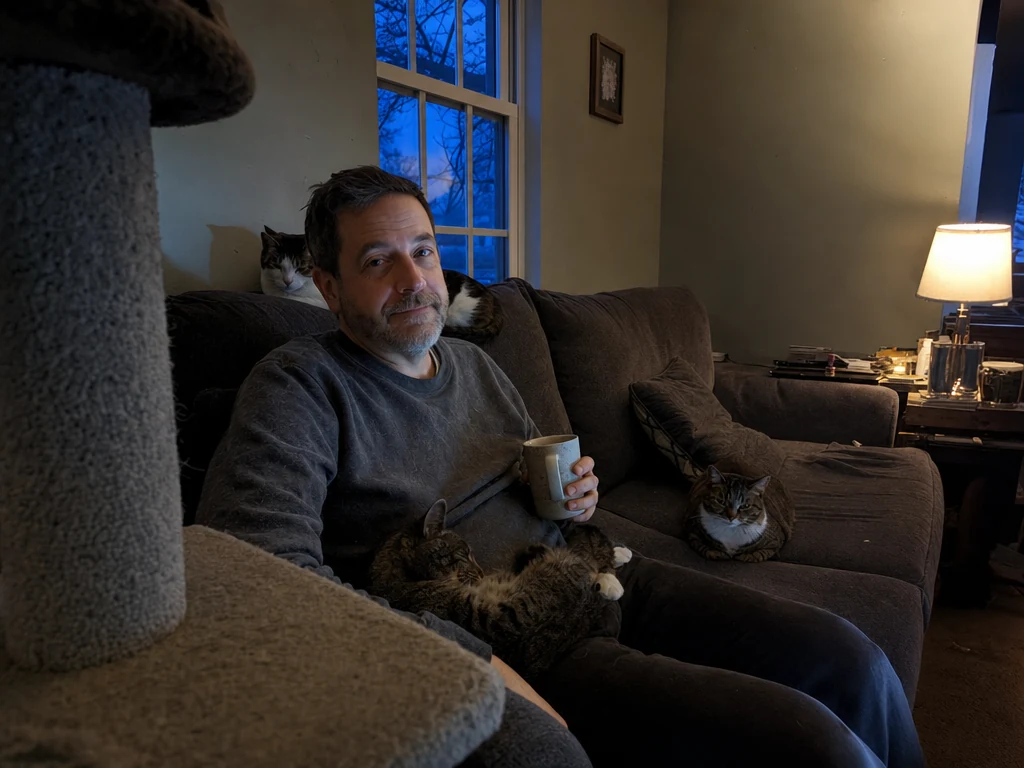
The same animal logic in reverse. This frame reads as solitude, not warmth. Pets filter, and this one is filtering the wrong way.
There's also an age trap nobody warns you about. A 22-year-old with a puppy reads as cute. A 45-year-old man alone with five cats reads as something else, and it isn't "fatherly." Pets filter. They pull some people toward you and push others away. That's not a flaw in the strategy, it's the whole mechanism. The only question that matters is whether the crowd your pet filters for is the crowd you actually want.
Warmth Plays a Longer Game Than You Think
Here's the thing the dog trick gets accidentally right. Warmth cues do real work, they just pay off on a different clock. Women read masculine cues in a man's face and map them onto short-term attraction. They read cues of kindness and warmth and map those onto long-term attraction. Men shown interacting warmly with an infant were rated more attractive than men shown being kind in other ways (Roney et al., 2006). Nurturance is its own currency. It cashes out in "I could build something with him," not "I'd swipe on that."
A dog is a nurturance cue. If you're after a relationship instead of a Saturday, the warmth your pet signals is aimed at exactly the right target. It tells a woman scanning for a partner that you can care for something outside yourself. But notice what it's doing even then. It's advertising the meal. It still isn't the meal. It amplifies a man worth building with. It can't invent one.
Keep the Dog or Lose It?
The honest answer is that it depends, and not in a hand-waving way. It depends on your age, your face, and the woman you're genuinely trying to reach. A warm 28-year-old chasing something serious might find the golden retriever is his single best asset. A 40-something who already reads as a little solitary might have a cat pile working quietly against him. Same animal category, opposite outcome. Nobody can eyeball that trade-off from a slogan on a forum.
That's the real problem with folklore. It hands every man the same answer to a question that's different for each of them. "Get a dog pic" is useless the moment you ask which pic, which pet, in which slot, for which goal. Those are the only questions that decide whether the animal is pulling its weight or wasting a photo you can't get back.
This is the layer Flairt reads for you. It looks at your actual photos against the actual research and tells you whether the pet is lifting your profile or quietly dragging it, before you build your whole first impression around a leash. Built on 30+ peer-reviewed studies, including the ones behind this article.
Because in the end the dog was never the point. The man holding the leash is. The pet can only ever say something true about him, louder. Your job is to make sure the true thing it's saying is the one you'd want said out loud.
References
- Gouda-Vossos, A., Brooks, R. C., & Dixson, B. J. W. (2016). The Interplay Between Economic Status and Attractiveness, and the Importance of Attire in Mate Choice Judgments. (Sexual conflict and social-context effects on attractiveness.) Available at: pmc.ncbi.nlm.nih.gov/articles/PMC4701490/
- Dürnberger, C. (2022). Wanna See My Dog Pic? A Comparative Observational Study of the Presentation of Animals on Online Dating Profiles in Vienna and Tokyo. Animals, 12(2), 230. Available at: pmc.ncbi.nlm.nih.gov/articles/PMC8833676/
- Roney, J. R., Hanson, K. N., Durante, K. M., & Maestripieri, D. (2006). Reading men's faces: women's mate attractiveness judgments track men's testosterone and interest in infants. Proceedings of the Royal Society B, 273(1598), 2169–2175. Available at: pmc.ncbi.nlm.nih.gov/articles/PMC1635527/
- Guéguen, N., & Ciccotti, S. (2008). Domestic dogs as facilitators in social interaction: An evaluation of helping and courtship behaviors. Anthrozoös, 21(4), 339–349. (As reported in Dürnberger, 2022.)
- Kogan, L. R., & Volsche, S. (2020). Not the cat's meow? The impact of posing with cats on female perceptions of male dateability. Animals, 10(6), 1007. (As reported in Dürnberger, 2022.)
Is your pet pulling its weight, or wasting a slot?
The dog can't save an average profile. But it can quietly help a good one.
Flairt analyses your photos and profile against the same research covered in this article, then builds a personalised strategy that tells you exactly which shots to keep, cut, or replace. Built on 30+ peer-reviewed studies and real platform data.
Frequently asked questions
Do dogs actually get men more matches on dating apps?
A dog helps, but not the way folklore claims. Men were more successful getting women's phone numbers on the street when a dog was with them, because dogs read as signals that the owner is social, reliable and caring (Guéguen & Ciccotti, reported in Dürnberger, 2022). That warmth boost adds appeal to a man who already presents well. It does not manufacture attraction on its own.
Should I put my cat on my dating profile if I'm a man?
Be careful. In one survey of women aged 18 to 24, men shown with cats were rated as less masculine, more neurotic, and less dateable for both short and long-term relationships (Kogan & Volsche, reported in Dürnberger, 2022). Dogs are the safer signal for most men. If a cat is genuinely part of your life, keep it to a single relaxed shot, not the centrepiece.
Should my pet be in my main dating profile photo?
No. Your first photo has one job: show your face clearly. A pet that hides your face, or a photo that is only your pet, wastes your most valuable slot. Social context only lifts your appeal when you are obviously the subject of the photo (Gouda-Vossos, 2016). Lead with you, then let the pet play a supporting role later in the deck.
Why do dogs work better than cats for men in dating photos?
Dogs need daily attention, walks and care, so they read as proof that their owner is social, dependable and capable of looking after something (Dürnberger, 2022). Dogs were the most frequently shown animal on dating profiles in both Vienna and Tokyo, appearing in 46.4% of animal photos versus 25.7% for cats. Men labelled 'dog people' tend to be seen as more masculine than those labelled 'cat people'.