
The 5 Photos That Decide If She Swipes or Scrolls Past

Do this before you read another word of dating advice. Build a fake profile as a woman. Spend ten minutes swiping through the men in your city. Then come back.
Most guys who try it go quiet for a second. The photos on the other side of that swipe are not normal guys having a normal Tuesday. They're on yachts. They're mid-lift with a six-pack that catches the light. They're standing next to a Ferrari that probably isn't theirs, in a professional shoot that definitely wasn't cheap. And your entry into that arena is a blurry bathroom mirror selfie, a group shot where a stranger would guess your friend is the single one, and a photo from a work trip two years ago where you're squinting into the sun. You are not competing with average men. You are competing with a highlight reel, and you brought a shoebox of vacation snapshots.
Here's the part that should make you angry rather than defeated. The dating-advice industry has spent years telling guys the fix is confidence, or a better bio, or "just be yourself." That advice is comfortable because it costs the person giving it nothing and asks you to change nothing you can point a camera at. Meanwhile the apps profit either way, whether you match or not, and the guys who figured out photos years ago are quietly eating the matches you think you're owed for being a decent person. Blame the lineup, not the face.
Five Slots, Five Jobs
You get somewhere between four and six photo slots depending on the app. Treat each one like a candidate walking into a job interview, because that's what it is. A photo that doesn't clearly show your face, your body, your social life, your ease, or your trajectory is a candidate who showed up and said nothing. Below are the five that should be doing the talking, and the research behind why each one earns its slot.
1. The Face Shot That Sets the Mood
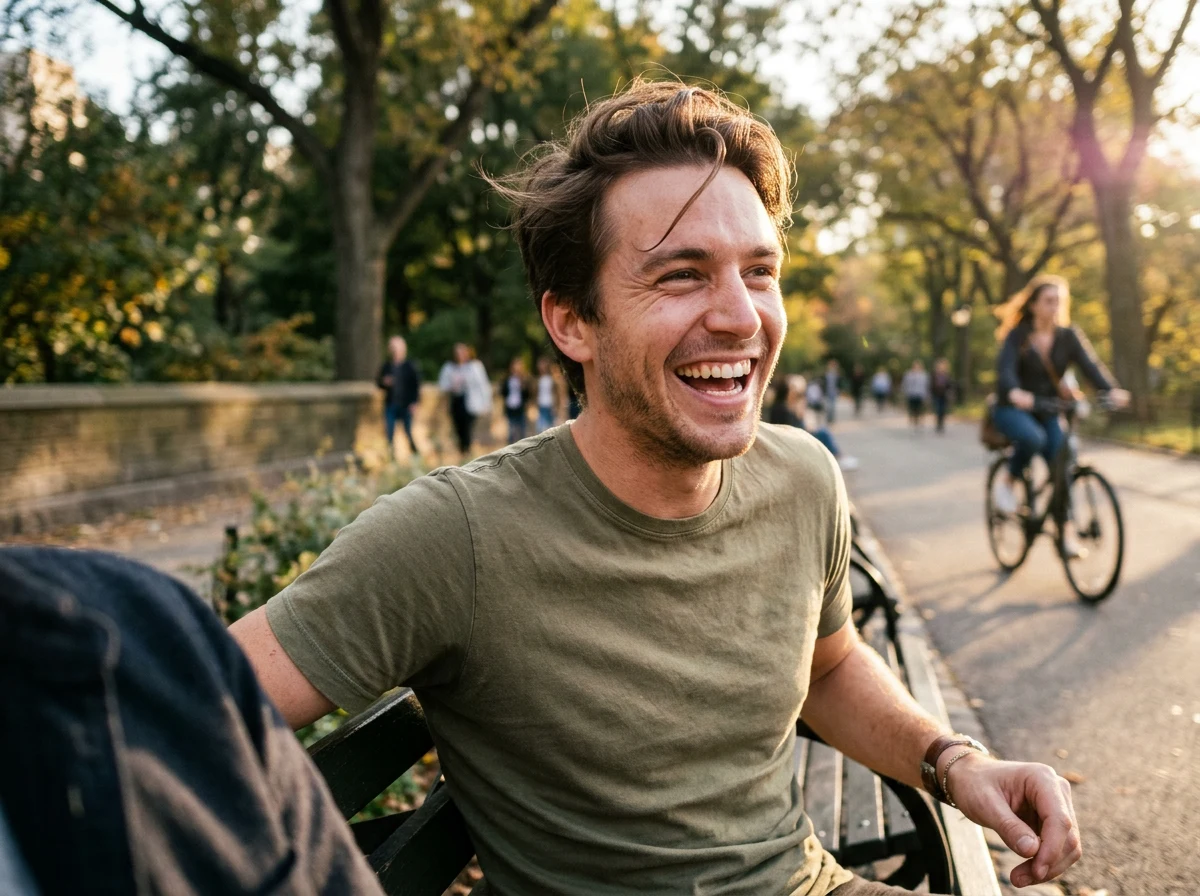
This one carries more weight than people expect. Strangers who read as expressive, meaning their face actually does something when they laugh or smile, get liked more in first impressions and are consistently rated as more socially likable by people who have never met them (Kavanagh, 2024). That's not a small effect you can shrug off. It's the difference between a face someone's brain files as warm and one it files as closed, before a single word is exchanged.
So the first photo is one thing only: your face, genuinely laughing or smiling, no one else in frame, not even blurred in the background. No sunglasses, no hat pulled low, no group shot standing in for it. This is the photo doing the emotional work of a first hello. If she's even moderately drawn in here, she'll stay to see the rest of your case.
2. The Body You're Otherwise Hiding
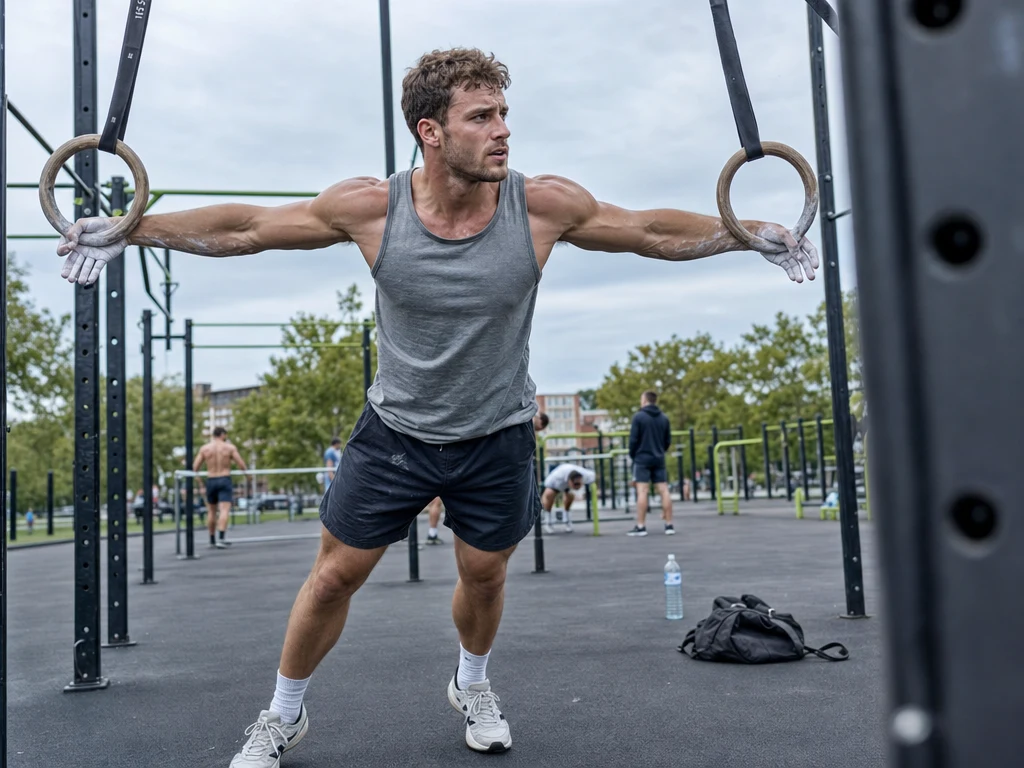
Second slot, full body. This can be a sport, a hobby that photographs well, ideally a skill that looks genuinely cool: a running shot, a climbing move, rings, whatever you've actually got. If sport isn't your thing, a plain full-body shot in clothes that fit you properly still does the job.
The reason this earns its own slot rather than getting cropped out is unambiguous. A drive toward greater lean muscle mass and its attractiveness payoff shows up across cultures, not as a niche preference of gym-obsessed guys online (Brierley, 2016). It runs deep enough that even facial cues correlated with higher muscle mass get read as more masculine and more attractive on their own, before anyone sees the rest of the body (Lei et al., 2019). A tight headshot hides that signal completely. A full-body photo is the only slot that can show it at all.
3. The Group Shot Where You're the Point
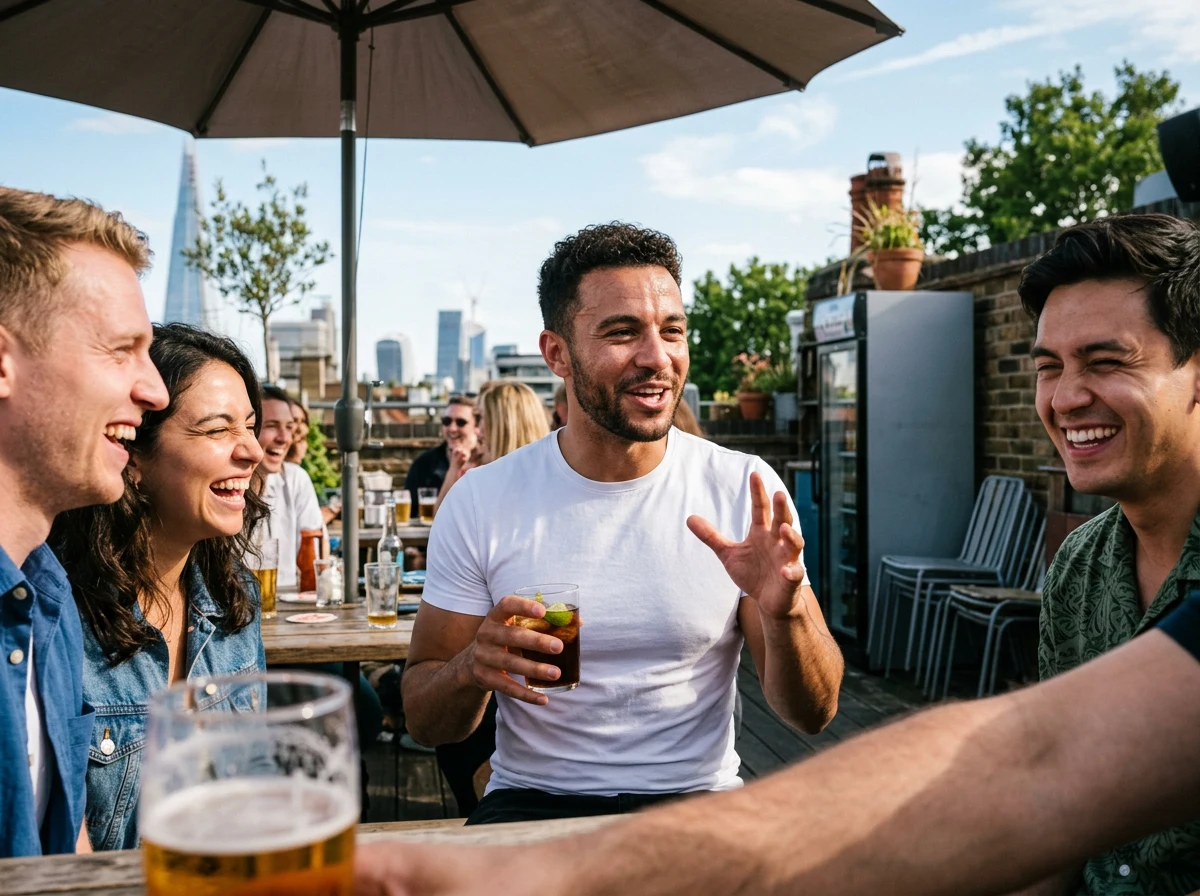
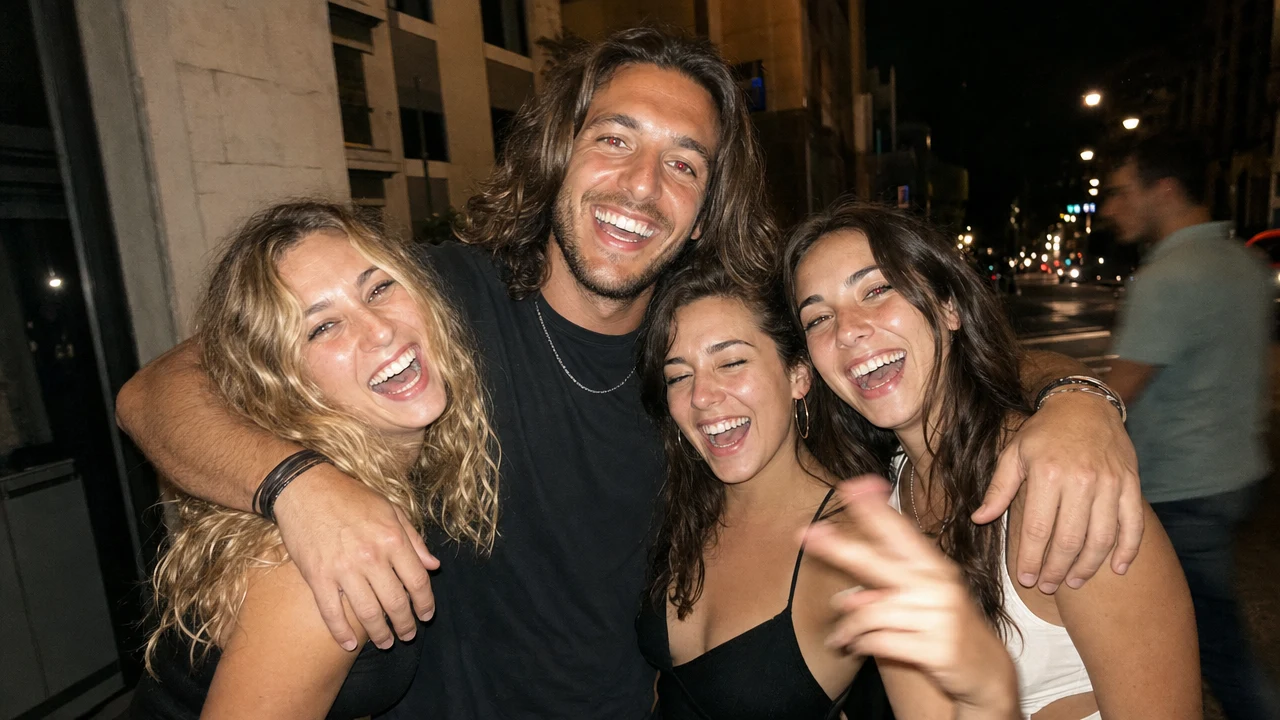
A group shot proves you have friends and that people enjoy being around you. It's also the easiest slot to sabotage yourself with, because the same social context that can lift you can just as easily lift someone else in the frame instead.
Social context measurably changes how attractive and how high-status a man is rated, but that boost attaches to whoever the eye lands on, not to everyone in the photo equally (Gouda-Vossos et al., 2016). If a stranger can't tell which guy is you inside one second of looking, you've handed your own effect to somebody else, for free. It is genuinely better to use a slightly worse-quality photo where you're unmistakably the main character than a beautifully lit one where your friend upstages you. Find the frame where everyone's attention, posture, or laughter is visibly pointed at you: mid-story, mid-toast, whatever it takes to make you the obvious centre.
4. The Photo Nobody Poses For

Every photo we've covered so far has one thing in common: you know the camera is there. This one is different on purpose. A friend takes it without warning, mid-conversation, while you're buried in your own couch talking about nothing in particular.
I'll be straight with you on this one: the studies I'd want here, posed against candid, haven't been run in a way that isolates dating profiles specifically. This is my read as a photographer, not a peer-reviewed finding. But after years behind a camera, the pattern is not subtle. A posed shot shows people what you'll look like when you're trying. A candid shot shows them what you'll look like when you've stopped. Your posture when nobody's asking anything of you, the shape your mouth makes when you're not arranging it, is information a posed photo cannot fake and most guys have never once put on their profile. It's an underrated signal precisely because almost nobody uses it on purpose. If you don't have a real one yet, stage it. Sit where you'd actually sit, talk to a friend about something real, and have someone else take the photo without a countdown.
5. The Shot That Hints at Where You're Headed
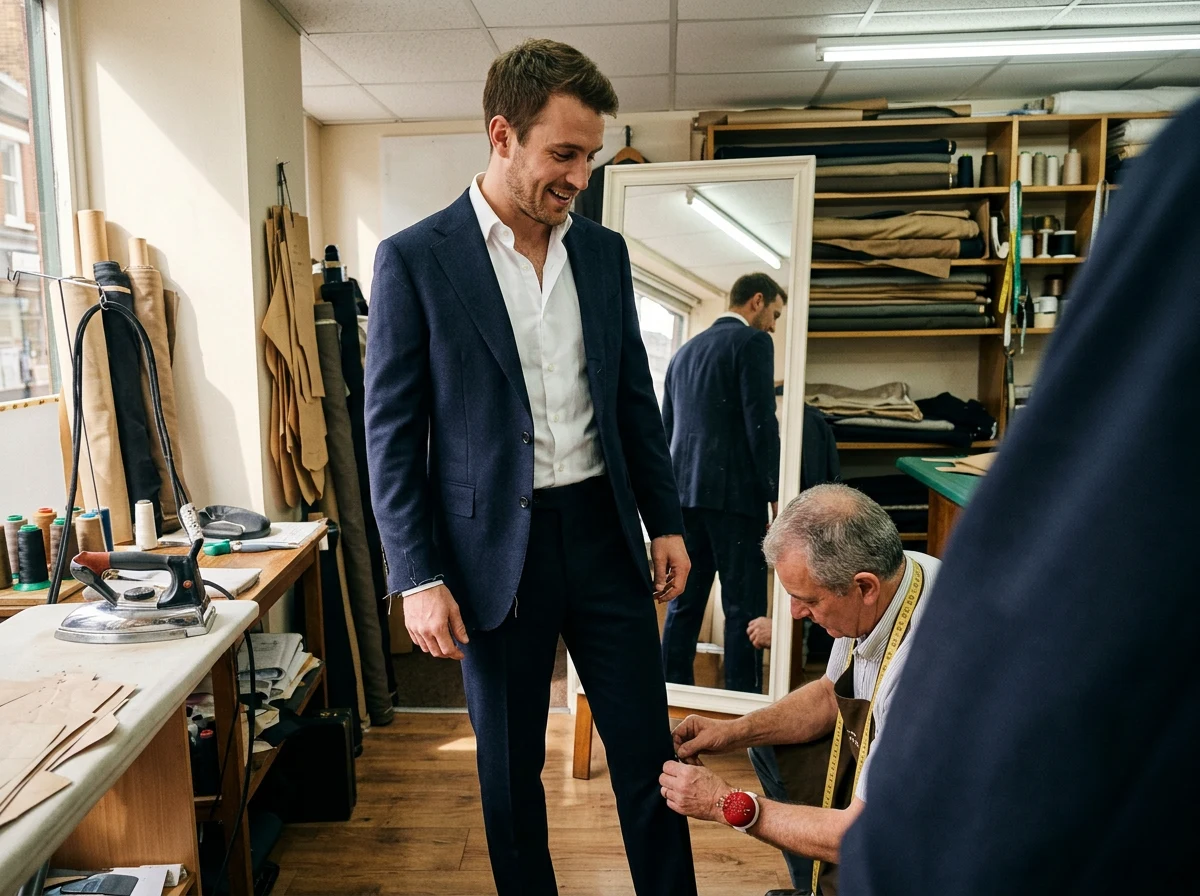
You don't need to be rich for this one. You need one photo that lets her imagine what you'd look like if you were: well-dressed, at a nicer venue than usual, on a boat, getting fitted for a suit. The point isn't the price tag in the frame. It's the mental image of you fitting in somewhere nicer, instead of looking out of place in sneakers and shorts.
This one makes people uncomfortable to say out loud, so most advice quietly skips it. The data doesn't. Clothing that signals social status measurably raises how attractive a man is rated, specifically for men, not as a general courtesy effect that applies to everyone in a photo (Gouda-Vossos et al., 2016). And in actual online dating outcomes, not lab ratings, men's income changed how often women reached out first, climbing steadily above fifty thousand dollars and surging hard past two hundred fifty thousand, with no equivalent bump for women's income at all (Hitsch et al., 2006). Whether that's fair is a separate conversation. Whether it's real is not.
The Rule Above All Five
None of this replaces you. Five good photos amplify the guy underneath them. They don't invent him. Every guy still has to bring something of his own to the five slots above: his humor, his interests, whatever makes him him and not a template. Think of the list above as the floor.
But don't let that soften the main point. On the apps, for better or worse, photos do almost all of the work before a single word gets typed. You could be the best version of yourself in person, funny, grounded, exactly what someone's looking for, and it will never matter if she swipes left on a profile that never gave her a reason to stop scrolling. The in-person guy doesn't get a vote until the photo earns him one.
If your camera roll right now is mostly blurry group shots and one decent photo from two years ago, that's not a character flaw, it's just a gap most men never had a reason to close. Flairt can build all five of these from the selfies already on your phone, in minutes, grounded in the same research covered here rather than a stranger's opinion of your jawline.
We'll cover what to leave out of your lineup, the photos quietly working against you, in the next one.
References
- Kavanagh, P. S., et al. (2024). Being facially expressive is socially advantageous: Evidence from perceptions of well-liked and disliked others. Available at: pmc.ncbi.nlm.nih.gov/articles/PMC11176176/
- Brierley, M. E. (2016). The Body and the Beautiful: Health, Attractiveness and Body Composition in Men's and Women's Bodies. University of Westminster.
- Lei, X., et al. (2019). The Influence of Body Composition Effects on Male Facial Masculinity and Attractiveness. Available at: pmc.ncbi.nlm.nih.gov/articles/PMC6328455/
- Gouda-Vossos, A., Brooks, R. C., & Dixson, B. J. W. (2016). Sexual Conflict and Gender Gap Effects: Associations between Social Context and Sex on Rated Attractiveness and Economic Status. Available at: pmc.ncbi.nlm.nih.gov/articles/PMC4701490/
- Hitsch, G. J., Hortaçsu, A., & Ariely, D. (2006). What Makes You Click? Mate Preferences and Matching Outcomes in Online Dating. Available at: home.uchicago.edu/~hortacsu/onlinedating.pdf
Still using the same three photos from two years ago?
Five slots. Five jobs. Let's fill them properly.
Flairt turns the selfies already on your phone into the full lineup: portrait, full body, group, candid, and status, all generated for you and grounded in 30+ peer-reviewed studies, including the ones in this article.
Frequently asked questions
What 5 photos should a man have on his dating profile?
A solo portrait with a genuine smile and no other people in frame, a full-body shot that shows your physique or a skill in action, a group photo where you are clearly the central figure, a candid unposed shot that shows your relaxed body language, and one photo that hints at taste or status. Each photo does a different job. Repeating the same angle or the same expression across your lineup wastes slots you cannot get back.
Why do group photos hurt some men's dating profiles?
Social context measurably shifts attractiveness and status ratings, but only for the person the context is attached to (Gouda-Vossos et al., 2016). If a stranger cannot tell which guy is you within a second, the group photo is lifting someone else's profile, not yours. Use a group shot only if you are unmistakably the one being looked at, gestured to, or laughed with.
Does a full-body photo actually help a man's dating profile?
Yes. Higher lean muscle mass is consistently rated as more attractive in men, and a documented cross-cultural drive for muscularity shows this is not a niche preference (Brierley, 2016). Even facial cues of body composition are read as more masculine and attractive on their own (Lei et al., 2019). A full-body shot lets that signal register at all. A tightly cropped face photo hides it completely.
Do wealth and status cues really make men more attractive on dating apps?
Clothing that signals social status measurably raises attractiveness ratings for men specifically (Gouda-Vossos et al., 2016). In real online dating outcomes, men's first-contact rates from women climbed steadily above a $50,000 income and jumped as much as 151% for men earning over $250,000, with no matching effect for women's income (Hitsch et al., 2006). One well-chosen photo cannot fabricate a salary, but it can suggest the trajectory.