
The Shirtless Selfie Is Wasting the Body You Built

You put in the year. You stopped ordering the second beer, you stopped skipping leg day, and now your shirts fit differently in a way that took actual effort to earn. So you do the thing that feels obvious: bathroom mirror, phone up, shirt off, flash on. It feels like proof. It is proof, just not of the thing you think.
That photo mostly proves you were alone in a bathroom at night with decent lighting equipment and nobody to hand you the phone. The physique is real. The presentation is doing it a disservice, and the research on what actually reads as attractive in a photo explains exactly why.
Why the mirror flex reads wrong
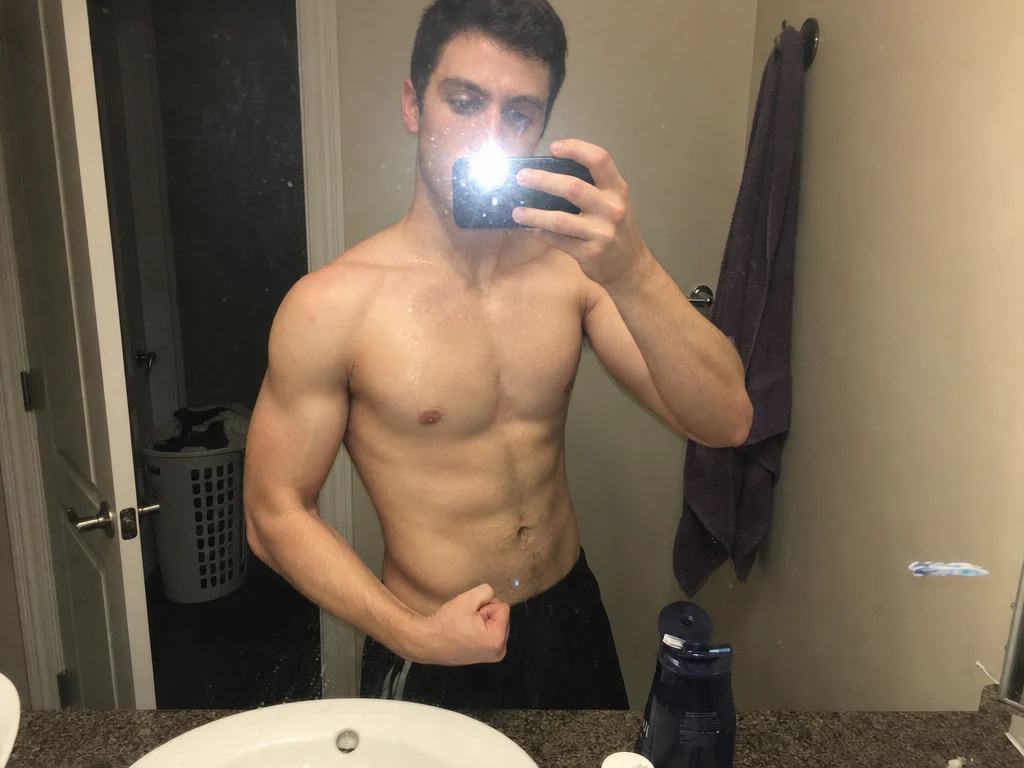
The research on dating-profile photos keeps pointing the same direction from different angles. Profiles built around candid, in-the-middle-of-something photos read better than static, posed self-display (Dürnberger & Springer, 2022). Confident, relaxed body language outperforms deliberate posturing (Ridley, 1993). A bathroom mirror flex fails both tests before anyone has even looked at your abs. It's the most posed, most self-focused, least relaxed photo available to you, taken in the one room in the house with the worst light.
The girl at the beach already worked this out

Watch how a woman who's proud of her body actually posts it. Tight jeans instead of nothing. A half-turn at the beach instead of a full one facing the camera. A shot from twenty feet back that leaves something out instead of one from two feet away that leaves nothing. She's not hiding the asset. She's letting it work harder by not announcing it.
The same pattern shows up with money, and it tells you something bigger than beach photos. Openly flashing a bank balance or a car payment does not raise how attractive a man reads as, because status, once you say it out loud, stops working the way it worked while it was only implied (Manson, 2012). Whatever the asset, announcing it tends to undercut the exact thing it's trying to prove. Subtlety isn't modesty here. It's a lever. Hide just enough of the reveal and the person looking fills in the rest themselves, which is a conclusion they'll trust more than one you handed them directly.
Your muscle is already talking before you take your shirt off
Here's the part that should actually change how you think about that mirror photo. Muscle mass gets read as masculinity before anyone sees you without a shirt. Faces built with more muscle, not more fat, get rated as more masculine and more attractive on sight, and muscle mass carries more weight in that judgment than fat mass does (Lei et al., 2019). Your jaw, your neck, the way your shoulders sit under an ordinary t-shirt: that's already broadcasting the twelve months in the gym. The full reveal isn't introducing new information. It's repeating something people already clocked with your shirt on, just louder and in worse light.
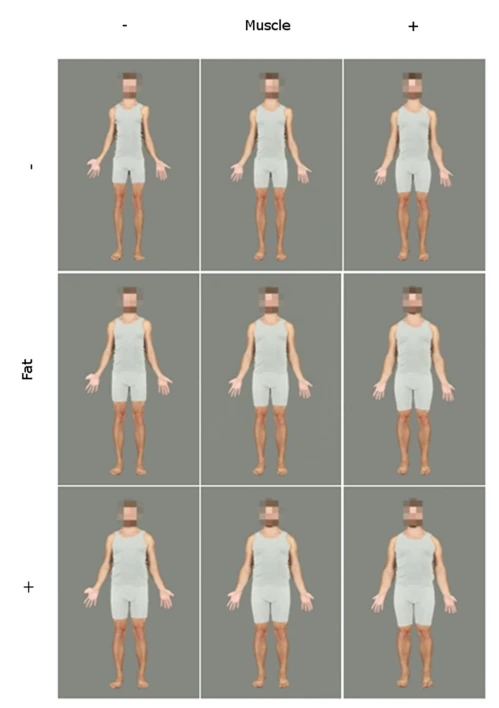
Figure 3 from Brierley et al. (2016): the male body morphed across fat and muscle levels used to test what people actually rate as attractive.
And the target you're chasing at the gym was never a health target to begin with. When researchers had people adjust computer-generated male bodies to look maximally healthy, then separately to look maximally attractive, the two images didn't match. The version rated most attractive carried noticeably more muscle than the version rated healthiest (Brierley, 2016). The male physique men chase in the mirror is already a display standard, built for an audience, before a single photo gets taken. You don't also need to stage the unveiling.
Who's actually selling you the mirror selfie
Nobody making money off gym content has a reason to tell you the flex is the weak move. Transformation photos are cheap to produce and easy to post, so an entire economy of fitness accounts keeps repeating that the shirtless reveal is the finish line. It's the finish line for their engagement numbers. It was never the finish line for your dating profile, and treating the two goals as the same one is how a genuinely good year of gym work ends up buried in a photo nobody swipes past twice.
Same body, better context
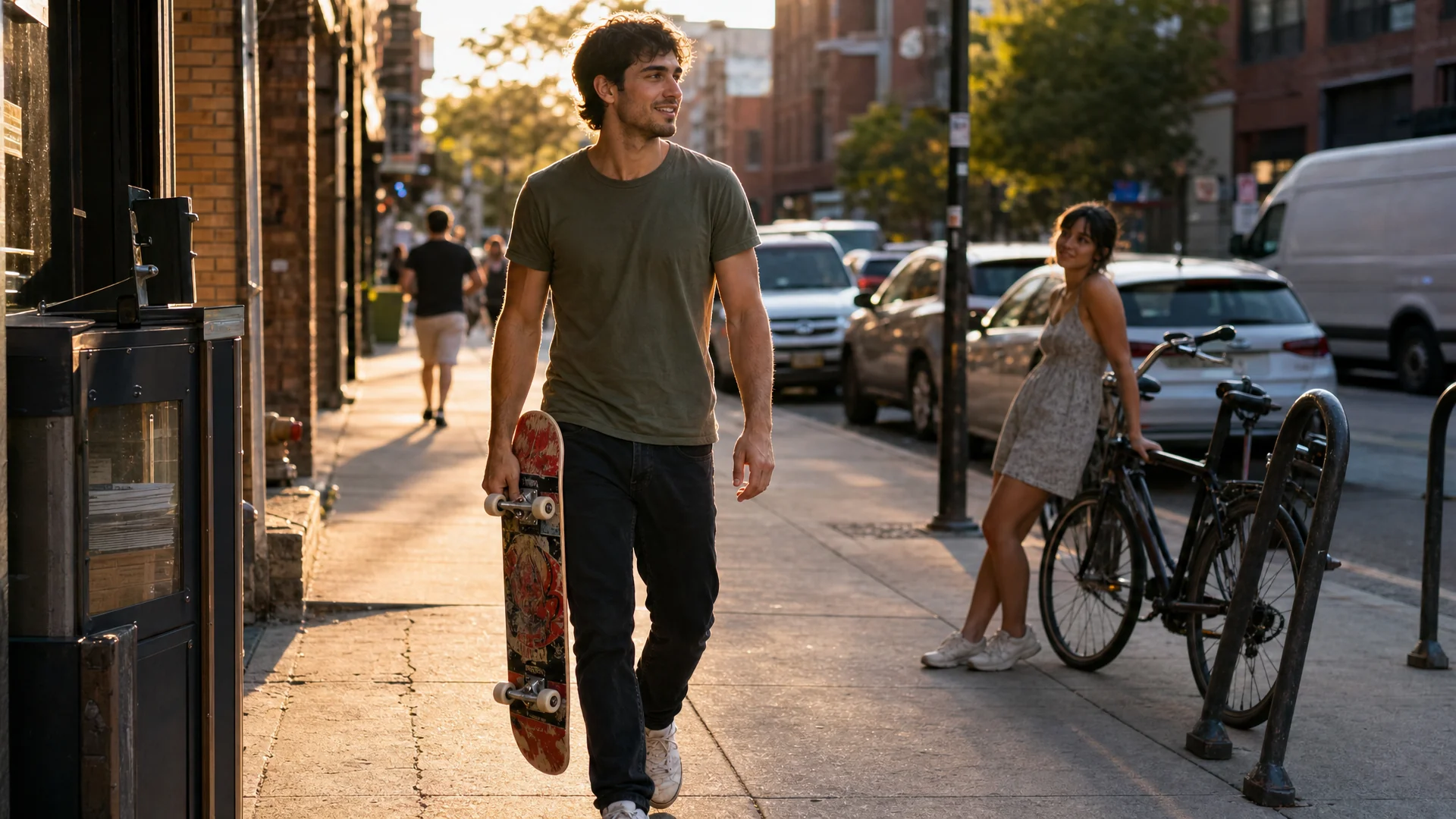
Take the exact same physique and change three things. Put a shirt on. Take him outside. Give him something to do with his hands, a skateboard, a basketball, a dog on a leash, it barely matters what. Golden hour instead of a bathroom bulb. Nothing about the body changed. Only the frame did, and the frame is doing most of the work.
Candid, activity-based photos consistently outperform posed self-display in how dating profiles land (Dürnberger & Springer, 2022). The skateboard shot works for the same reason the beach photo works for her: it shows the asset without announcing it, and the person looking gets to reach the conclusion on their own instead of being handed it.
If the physique isn't quite there yet
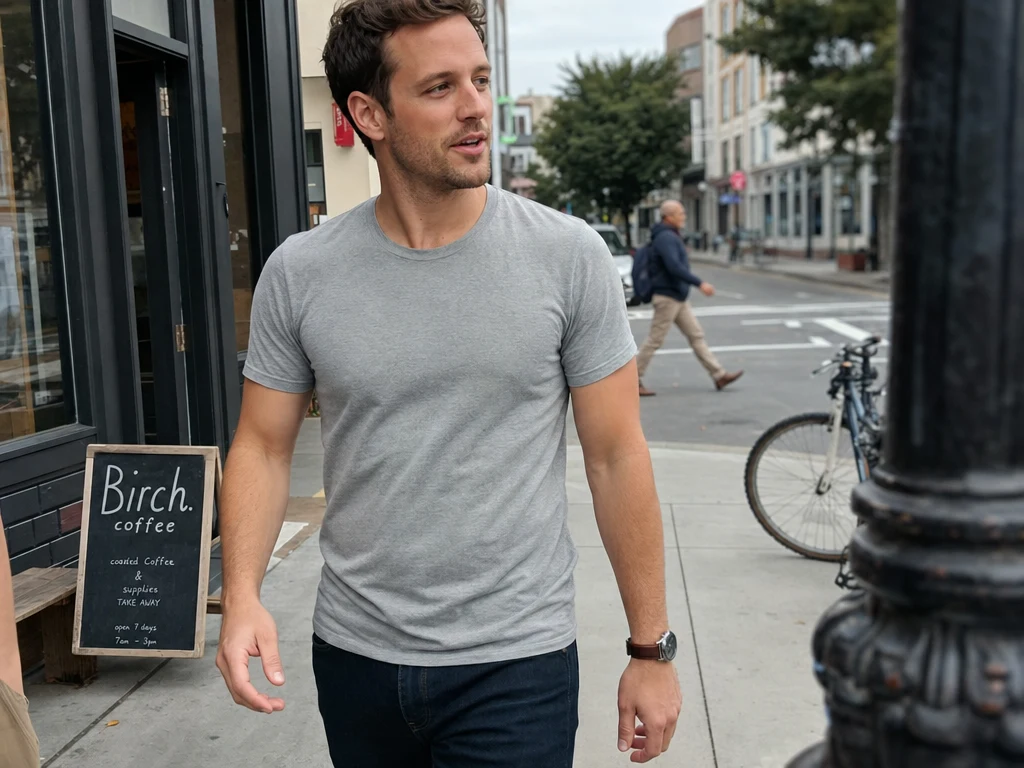
None of this is an argument against ever showing skin. If the physique is genuinely built, one well-composed photo where it's visible, mid-swim, on a hike, doing something, can do real work. The problem was never the skin. It's showing it with nothing else going on, which is exactly what a bathroom mirror gives you: no activity, no context, nowhere for the eye to go but the flex itself.
If you're not there yet, this rule actually works in your favor. A t-shirt that fits the shoulders you do have, worn in real daylight instead of bathroom fluorescents, shapes the story on your terms instead of leaving everything to a body that isn't finished yet. Knowing what to show and what to let the fabric imply is a more reliable skill than waiting on a physique that might take another two years to arrive.
What this is actually asking of you
None of this is really about your abs. Context beating display is a bigger skill than dating apps. It's the same thing that works in a job interview or a room full of strangers: what you have matters, but what you let people notice, and how you let them find it, decides how much credit you get for it. The guy who gets this stops needing to announce anything. He just gets asked about it.
Most men don't have a stock of golden-hour, doing-something photos sitting on their camera roll. They have the gym mirror, a work trip from two years ago, and not much else. Flairt works from the photos already on your phone and builds the version of you that shows the work without staging the flex, grounded in the same research covered here rather than a stranger's opinion of your physique.
References
- Brierley, M. E., Brooks, K. R., Mond, J., Stevenson, R. J., & Stephen, I. D. (2016). The Body and the Beautiful: Health, Attractiveness and Body Composition in Men's and Women's Bodies. University of Westminster.
- Lei, X., et al. (2019). The Influence of Body Composition Effects on Male Facial Masculinity and Attractiveness. Available at: pmc.ncbi.nlm.nih.gov/articles/PMC6328455/
- Manson, M. (2012). Models: Attract Women Through Honesty. CreateSpace Independent Publishing Platform.
- Ridley, M. (1993). The Red Queen: Sex and the Evolution of Human Nature. Harper Perennial.
- Dürnberger, M., & Springer, N. C. (2022). Wanna See My Dog Pic? A Comparative Observational Study of the Presentation of Animals on Online Dating Profiles in Vienna and Tokyo. Available at: pmc.ncbi.nlm.nih.gov/articles/PMC8833676/
The gym did its part. Your photos should too.
Stop staging the flex. Show the context instead.
Flairt builds a full lineup from the photos already on your phone, grounded in 30+ peer-reviewed studies, including the ones covered in this article.
Frequently asked questions
Should I post a shirtless photo on my dating profile?
Only if the physique is genuinely built, and even then it works better as one supporting photo, not your lead. Muscle mass reads as masculine on its own, even through clothing and in the face (Lei et al., 2019), so a shirtless mirror shot is rarely adding new information. A photo of you doing something, dressed, in good light, usually outperforms it.
Why do gym mirror selfies perform badly, even for men with good physiques?
A posed, self-focused mirror photo is the definition of what research on dating-profile presentation flags as the weaker option. Profiles built around candid activity, not static self-display, make a stronger impression (Dürnberger & Springer, 2022), and confident, relaxed body language reads as more attractive than deliberate posturing (Ridley, 1993).
Is the 'ideal' muscular male body based on health or just looks?
Looks. When researchers had people adjust male body images to look maximally attractive versus maximally healthy, the two images didn't match. The attractive version carried more muscle than the healthy one (Brierley, 2016), which means the standard men are chasing at the gym is already a display standard, not a health one, before a single photo gets taken.